
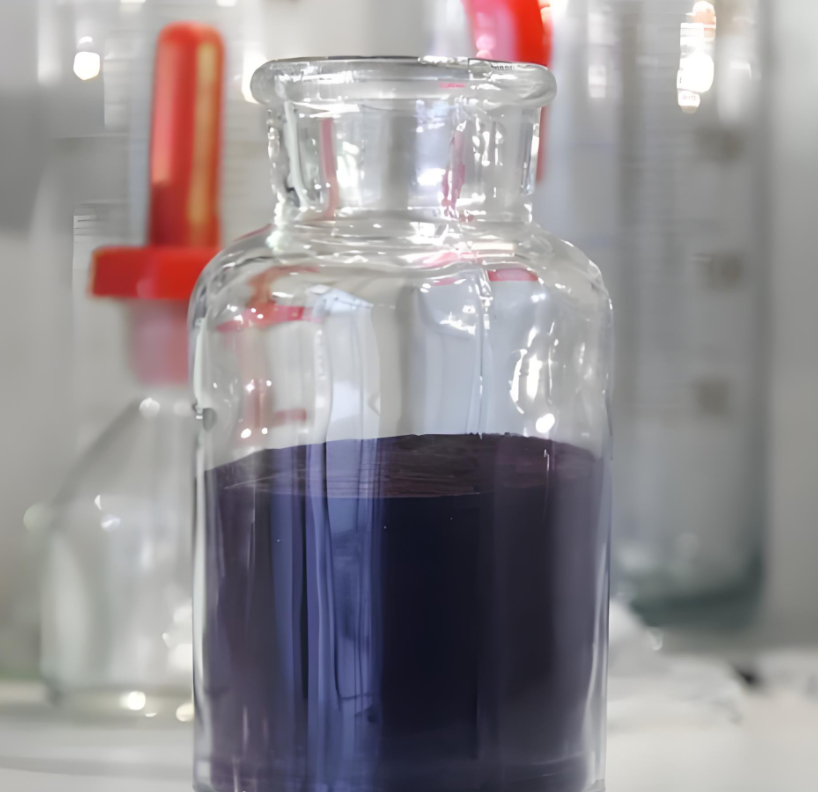
Application and Research of Lanthanum Hexaboride
Overview
Lanthanum hexaboride has a high melting point, high hardness, thermal and chemical stability, and has the advantages of low electron work function, high emissivity (high current density), high efficiency, good resistance to poisoning, long lifespan, resistance to ion bombardment, and strong adaptability. It is an excellent hot cathode material. As one of the preferred electron source materials for miniaturization and long-life design of hollow cathodes, lanthanum hexaboride has great application prospects in medium to high power space electric propulsion missions. Especially with the demonstration of high-power, long-life aerospace electric propulsion missions, it has attracted increasing attention from the field of electric propulsion research both domestically and internationally.
Preparation method
There are various methods for preparing lanthanum hexaboride, such as using lanthanum chloride and potassium borohydride as raw materials, keeping at 900 ℃ for 3 hours to prepare ultrafine lanthanum hexaboride powder, and then using discharge plasma sintering to prepare lanthanum hexaboride polycrystals. 95% boron powder and lanthanum trichloride can also be used as the main raw materials to synthesize lanthanum hexaboride powder by boron thermal reduction method, with a boron and lanthanum content of 99.89%. This method does not introduce any carbon or oxygen elements during the production process, resulting in products with low carbon and oxygen content and high purity. In addition, another method for preparing lanthanum hexaboride powder has been reported in the literature. Specifically, using industrial pure aluminum, A110La intermediate alloy, and A13B intermediate alloy as raw materials, with a mass ratio of 1: (0.5-0.8): (0.8-1.2), lanthanum hexaboride powder is synthesized by melt reaction method. This method requires low-cost raw materials, simple equipment and process, and can be carried out under normal pressure. The required temperature is relatively low, and no protective atmosphere is needed. The resulting lanthanum hexaboride particles have a regular shape and are cubic blocks.
Analysis and determination
The sample of lanthanum hexaboride is dissolved in dilute nitric acid, and the boron content in the substance can be determined by acid-base titration using disodium ethylenediaminetetraacetic acid as a masking agent and mannitol as a boric acid chelating agent. This method is simple, fast, and accurate to operate, with good accuracy and precision. The boron recovery rate ranges from 99.45% to 100.48%, and the RSD is less than 0.50%.
Application and Research
(1) To achieve the photofrequency division utilization of hydrogen production by photosynthetic bacteria, a photothermal conversion luminescent biomaterial was prepared using lanthanum hexaboride and chitosan. The absorption and photothermal conversion characteristics of biomaterial with different lanthanum hexaboride nanoparticles under visible light were studied. Research has found that this biomaterial can effectively transmit light with a wavelength of 510-650 nm to provide energy for hydrogen production by photosynthetic bacteria, while other wavelengths of light are used to excite lanthanum hexaboride particles to produce heat and provide thermal energy for photosynthetic bacteria. The absorbance and photothermal conversion ability of lanthanum hexaboride nanoparticles are significantly affected by particle size. When the average hydraulic diameter of lanthanum hexaboride particles in biomaterials is 295 nm, the temperature rise rate within 12 minutes is 0.41 ℃/min, which is 5.4 times that of glass slides.
(2) Nano composite coatings were prepared by blending lanthanum hexaboride, graphene oxide, and the base material polyvinyl butyral, and a transparent insulation film was made on glass by pulling method. The structure of the film was characterized using X-ray diffractometer, scanning electron microscope, and infrared spectrometer. The optical properties and thermal stability of the film were tested using UV visible near-infrared spectrophotometer and thermogravimetric analyzer. As a result, it was found that the polyvinyl butyral film with 0.25% graphene oxide and 0.30% lanthanum hexaboride added not only had good transmittance (73.4%) in the visible light region and good blocking of near-infrared light (average blocking rate 33.3%), but also had a certain degree of improvement in thermal stability compared to pure polyvinyl butyral film.
(3) Preparation method and water evaporation performance of photothermal conversion devices based on lanthanum hexaboride nanoparticles. A water evaporation device is constructed using lanthanum hexaboride with excellent photothermal conversion performance as the absorbing material, sponge with good hydrophilicity and low thermal conductivity as the support, filter layer, and water transport layer for seawater desalination and wastewater treatment. Using hydrophilic porous sponge as a carrier, lanthanum hexaboride, polyvinylidene fluoride, and N-methylpyrrolidone were ground to form a homogeneous solution. Then, a layer of lanthanum hexaboride was coated on the surface of the sponge carrier by dipping method, and dried to obtain a lanthanum hexaboride nanoparticle photothermal conversion device. The surface evaporation area and porosity of the prepared water evaporation device can be controlled according to the size of the sponge, raw material ratio, and dosage. Place the device into seawater, acidic wastewater, alkaline wastewater, or dye wastewater to be evaporated, and collect the evaporated and condensed clean water resources after being illuminated by a light source. The above device has a simple structure, is energy-saving and environmentally friendly, is easy to operate, and does not require special supervision.
Detailed explanation of the thermal emission principle of lanthanum hexaboride single crystal cathode
Lanthanum hexaboride single crystal, as a high-performance cathode material, has a wide range of applications in the field of electron emission. The principle of thermal emission is based on the specific structure and physical properties of the material, which enables the effective emission of electrons under heating conditions. The thermal emission principle of lanthanum hexaboride single crystal cathode will be analyzed in detail below.
1、 Structural characteristics of lanthanum hexaboride single crystal
Lanthanum hexaboride single crystal has a unique crystal structure, which gives it excellent electron emission performance. The atomic arrangement in its crystal determines the electronic density of states and electronic motion characteristics of the material, which in turn affects the emission behavior of electrons. In addition, lanthanum hexaboride single crystals also have high melting points and good chemical stability, which enable them to maintain stable emission performance in high temperature environments.
2、 Thermal emission process and mechanism
In the thermal emission process of lanthanum hexaboride single crystal cathode, the material needs to be heated first to reach a certain temperature. As the temperature increases, the electrons inside the material gain enough energy to overcome the surface potential barrier and escape into the vacuum. This process follows the basic law of hot electron emission, that is, the emission rate of electrons is closely related to temperature. Meanwhile, the specific structure of lanthanum hexaboride single crystals also helps to reduce the energy required for electron escape, thereby improving emission efficiency.
3、 Analysis of influencing factors
The thermal emission performance of lanthanum hexaboride single crystal cathode is influenced by various factors. Firstly, the purity of the material. High purity lanthanum hexaboride single crystals can reduce the interference of impurities on electron emission and improve emission stability. Next is the heating temperature, a suitable temperature range can ensure that electrons obtain sufficient energy to escape, while avoiding performance degradation caused by material overheating. In addition, the surface treatment process of materials can also affect their thermal emission performance, such as surface roughness and degree of oxidation, which can alter the conditions for electron escape.
4、 Actual application value
The thermal emission principle of lanthanum hexaboride single crystal cathode is of great significance in practical applications. Due to its excellent electron emission performance and stability, lanthanum hexaboride single crystals are widely used in vacuum electronic devices, electron microscopes, particle accelerators, and other fields. In these applications, the lanthanum hexaboride single crystal cathode can effectively provide the required electron flow, providing strong support for the normal operation of related equipment. Meanwhile, with the continuous advancement of technology, the application fields of lanthanum hexaboride single crystal cathodes will be further expanded.