
Low cost industrial metals challenge platinum status, tungsten carbide can reshape plastic recycling and cleaning processes
The latest research by a team from the University of Rochester in the United States shows that tungsten carbide, a low-cost metal material widely used in industrial cutting tools and machinery, has the potential to replace expensive and scarce platinum in catalytic performance. It can not only efficiently recycle plastics, but also promote cleaner and more energy-efficient chemical reactions.
Researchers point out that a large number of products in modern society, from plastics to detergents, rely on catalysts centered around precious metals such as platinum to drive critical reactions. However, platinum is expensive and resources are limited, making the development of sustainable alternatives an important direction in the field of catalysis. As a material with high abundance and low cost in the Earth's crust, tungsten carbide has long been used in industrial machinery and cutting tools, and is now being re examined as a potential "precious metal like" catalytic material.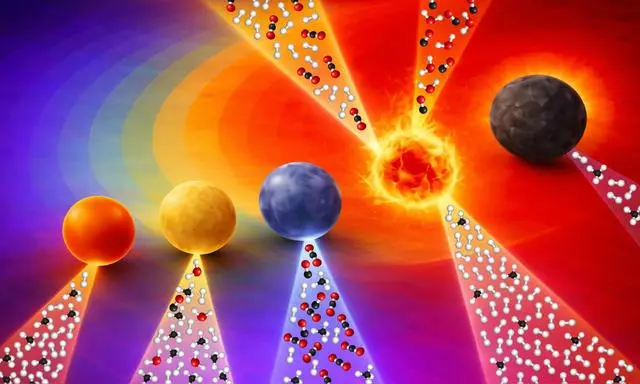
However, the application of tungsten carbide in chemical catalysis has always been limited by its complex crystal phase and surface structure, which has led to its instability in previous reaction systems. A team led by Associate Professor Marc Porosoff from the Department of Chemistry and Sustainable Engineering at the University of Rochester has conducted systematic research on this challenge. By precisely regulating the material structure under actual reaction conditions, the catalytic performance of tungsten carbide has been significantly improved. His doctoral student Sinhara Perera explained that the atomic arrangement of tungsten carbide can form multiple phases, each with a different surface structure and activity. However, in the past, due to the difficulty of directly measuring the catalyst surface in high-temperature and high-pressure reaction environments, people have lacked a clear understanding.
In the study published in ACS Catalysis, the team used the "programmed temperature carburizing" method to synthesize and regulate the phase structure of tungsten carbide nanoparticles in situ inside the reactor at temperatures above 700 degrees Celsius. Researchers systematically compared the performance of different crystal phases in reactions such as carbon dioxide hydrogenation and found that a specific phase - β - W2C tungsten carbide exhibits particularly excellent activity and selectivity in the process of converting carbon dioxide into fuel and high-value chemicals. Borosov pointed out that some thermodynamically more stable crystal phases may not necessarily be the most "useful", but rather relatively less stable phases perform better in catalysis. This means that through precise phase control, low-cost catalytic materials comparable to platinum can be obtained.
In addition to greenhouse gas conversion, the research team has also turned their attention to the global challenge of plastic waste. In a collaborative study led by Linxiao Chen from the University of North Texas and involving assistant professors Siddharth Deshpande from the University of Rochester and Borosov, researchers validated the potential of tungsten carbide in plastic upcycling. The relevant results were published in the Journal of the American Chemical Society. The team focused on studying the performance of tungsten carbide in the hydrocracking process, which can break down large molecules into reusable small molecule monomers or fuel molecules.
The experimental object is polypropylene, which is widely used in packaging and daily necessities. This type of disposable plastic has long and stable polymer chains, and traditional catalysts are difficult to effectively "bite off" these carbon chains. In addition, impurities in real waste streams can quickly poison conventional catalysts, and many platinum based catalytic systems rely on microporous carriers with small pore sizes, which are not conducive to the entry of bulky polymer chains into reaction sites. Borosov stated that tungsten carbide in the appropriate crystal phase possesses both metallic and acidic properties, which can activate and break carbon carbon bonds in polymers, while avoiding diffusion limitations caused by microporous structures, making it easier for "bulky" plastic chains to come into contact with catalytic surfaces.
The results showed that in the hydrocracking of polyolefin plastics, tungsten carbide catalyst not only has a much lower cost than traditional systems with platinum as the core, but its efficiency is more than ten times that of the latter. Researchers believe that this discovery has the potential to drive the design of a new generation of plastic recycling catalysts, making the conversion of plastic waste into high-value fuels and chemicals a reality, thereby providing important technological support for the circular economy.
In order to further understand and optimize the catalytic process, the team also started with the fundamental issue of temperature measurement and developed more accurate surface temperature monitoring methods. In catalytic reactions, some processes absorb heat and some release heat. Only by accurately grasping the true temperature of the catalyst surface can we reasonably couple multi-step reactions and avoid energy waste. Traditional methods rely heavily on temperature readings of the entire reactor, making it difficult to accurately reflect the temperature gradient and local hotspots on the surface of nanoscale catalytic particles.
For this purpose, the research team adopted the optical temperature measurement technology developed by visiting scholar Andrea Pickel's research group, and described this method in detail in a study published in EES Catalysis. In the demonstration experiment, a particle undergoing an exothermic reaction will transfer heat to a nearby particle undergoing an endothermic reaction. Researchers excite the particle with infrared light and monitor its emitted green light to achieve high-precision temperature measurement of the catalyst surface. Polosov pointed out that, depending on the chemical system, the difference between the traditional body temperature measurement and the actual surface temperature may be 10 to 100 degrees Celsius, which is a "very big error" for catalytic research in pursuit of high repeatability and reaction coupling.
With the help of this optical temperature measurement technology, the team systematically studied a cascade catalytic system: allowing the heat released by one reaction to precisely drive another reaction that requires heat absorption, thereby reducing external energy input and improving overall energy efficiency. Researchers believe that this method not only helps design more energy-efficient industrial catalytic processes, but may also reshape the experimental paradigm of the entire catalytic research field, making temperature measurements more reliable, data more comparable, and reproducible.
Multiple related works have received funding from institutions such as the Sloan Foundation, Department of Energy, National Science Foundation, and New York State Energy Research and Development Administration. With the advancement of research on tungsten carbide crystal phase control, plastic upgrading and regeneration, and high-precision temperature measurement, the scientific research community is gradually approaching a goal: to use the abundant and inexpensive industrial metals on Earth to complete the clean chemical tasks that could only be achieved by relying on precious metals such as platinum in the past.